
Isaiah 53

First Rejected, Then Revealed

Although our rabbi’s avoid teaching on Isaiah 53 and excluded it from our weekly Haftarah readings, it is one of the most striking passages in the Tanakh.

For centuries it has pressed an uncomfortable question:

What if the Scriptures actually predicted that Israel and the Jewish people would not recognize their Messiah at first?

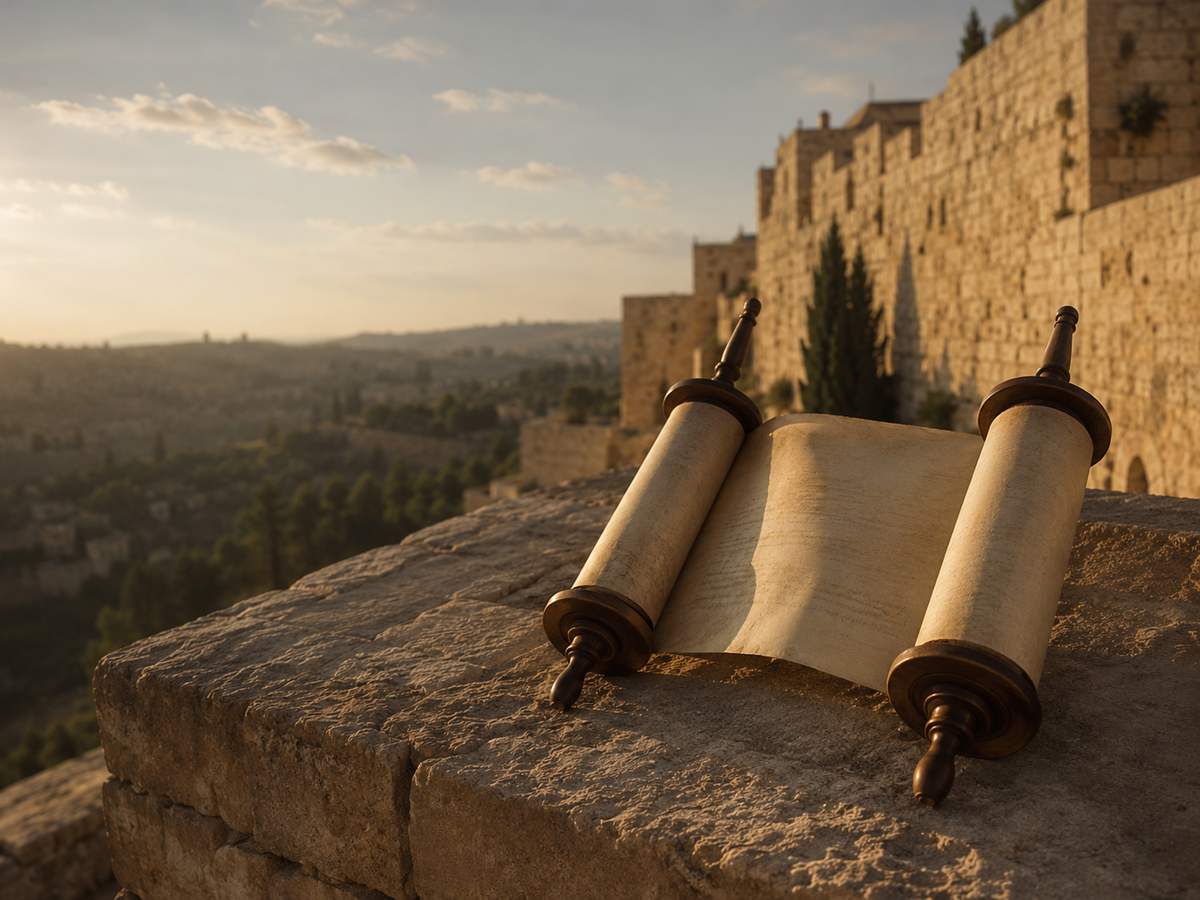
Open Torah scroll and Hebrew study materials in golden light

Isaiah 53

He had no form of beauty, that we should look at him: No charm, that we should find him pleasing. He was despised, shunned by men… Yet it was our sickness that he was bearing, Our suffering that he endured. We accounted him plagued, Smitten and afflicted by God.

Isaiah 53:2–4

Consider this mystery - Isaiah described a Messiah who would suffer before he is recognized and honored.

Unless we take this into consideration, we will miss the one the prophets described.

Isaiah predicts that many will interpret Messiah’s death and Israel’s rejection of him as failure, when in reality, He was bearing our sin, sickness, and suffering.

“But he was wounded because of our sins, Crushed because of our iniquities. He bore the chastisement that made us whole, And by his bruises we were healed.” (Isaiah 53:5)

The Torah teaches that Messiah will be the ultimate guilt offering - suffering not for His own sins, but for ours.

Our Rabbis have taught that a righteous one can atone for the sins of the guilty. This is why some Hasidic groups swing a chicken over their head on Yom Kippur and then put the chicken to death. The idea behind this is that their sins are transferred into the chicken, and the chicken then dies in their place. Compare this ritual (kapparot) to the words in Isaiah 53:5-6.

“We all went astray like sheep, Each going his own way; And the LORD visited upon him, The guilt of all of us.” (Isaiah 53:6)


Isaiah’s witness

But he was wounded because of our sins, Crushed because of our iniquities. He bore the chastisement that made us whole, And by his bruises we were healed.

Isaiah 53:5
Jerusalem sunrise with open Scriptures and a path of light suggesting response

Joseph’s Pattern

This pattern of rejection before revelation is also clearly seen in the life of Joseph.

Joseph is one of the most colorful and powerful figures in the Tanakh, the Hebrew Bible. Joseph was Jacob’s favorite son.

Jacob gave him a beautiful multicolored garment, a sign of his affection. But that very favor stirred resentment in Joseph’s brothers. Their jealousy burned so fiercely that they plotted to get rid of him. At first, they considered killing him, but instead they sold him into slavery, and Joseph was taken down to Egypt.

Yet Joseph’s story did not end in tragedy. Though he was betrayed and abandoned by his own flesh-and-blood brothers, the blessing of God was powerfully upon him. Though he began as a slave, he kept rising until he ultimately became second in command over all Egypt.

In time, the very brothers who had rejected him came to Egypt seeking bread because there was a severe famine in the land of Israel (Canaan). By then, Joseph had been living in Egypt for many years, and as a result, he dressed and looked like an Egyptian. So much so that his own brothers did not recognize him.

Yeshua Hidden Among the Nations

In a similar way, many Jewish people today do not recognize Yeshua as one of our own. He has often been portrayed not as a Jew, but as a Gentile. For centuries, much of Western art has presented Jesus as fair-skinned and European, disconnected from the culture, bloodline, and traditions of the Jewish people. This has made it harder for many of our people to see Him for who He truly is: The Jewish Messiah.

The moment of revealing

I am Joseph.

Genesis 45 pattern

Consider that the time came when Joseph revealed himself to his brothers.

As they stood before him seeking to buy food, Joseph appeared to them only as a powerful Egyptian ruler. Joseph’s brothers had no idea that this Egyptian-looking man was their brother whom they had betrayed.

Finally, in a very intense moment, Joseph revealed his true identity, saying, “I am Joseph.” His brothers were stunned and terrified because the one they rejected now stood before them, holding their fate in his hands. What did Joseph do? He saved and forgave them. He brought his brothers and father to Egypt and gave them the land of Goshen, where they multiplied and grew from one family into the Children of Israel.

Now consider the pattern that emerges from Joseph’s life.

• Joseph was rejected by his brothers.

• He suffered unjustly.

• He was hidden among the Gentiles in Egypt.

• His brothers did not recognize him at first.

• He was later revealed to them.

• The very one they rejected became the one who saved them.

First Rejected, Then Revealed

Isaiah gives us the prophecy. Joseph shows us the pattern.

Together, they reveal a Messiah who would first suffer, be rejected, and remain hidden and unrecognized by His own people until the appointed time.

This is the appointed time - Jesus is the Messiah!

Open Torah scroll and Hebrew study materials in golden light

Ask Privately

Have a private question?

Share your question with us. A real person from our team in Israel will read it and respond personally, typically within 24–48 hours.

Prefer to Text instead? Click here for our number.

Continue the Conversation

Ways to Reach Us

Whether you want to be notified about a future live conversation, send a text, or email us directly, we’d be glad to hear from you. Choose whichever option feels easiest.

Join a Live conversation

Coming Soon

We’re planning a live online conversation with Rabbi Kirt Schneider for Jewish people who have honest questions about faith, Scripture, and the Messiah.
Leave your email and we’ll send the details when the date is set.

Text Us Your Question

Personal Reply

Someone from our team will personally read your message and respond. Our team is in Israel, so replies may take up to 24 hours.
You can text your question to:
212-203-6406
If your on your phone, just click the button below.

Email us directly

Email

Prefer email? Email us at info@jews.com. We'd be glad to hear from you.