
Rabbi K.A. Schneider

Sukkot: Why God Commanded Our People to Rejoice

Chag Sameach, my beloved Jewish brothers and sisters. This is Sukkot, the Feast of Tabernacles—Zman Simchateinu, the Season of Our Joy.

What Is Sukkot? The Meaning of the Feast of Tabernacles

We’ve come to one of the most joyful times on God’s calendar, the calendar He gave our people in the Torah. Our sages named it Zman Simchateinu, the Season of Our Joy.

Most of us grew up with Sukkot. We remember the sukkah in the backyard or at shul, the lulav and etrog, meals under a roof of branches with the stars showing through. But have you ever stopped to ask why the Torah commands joy? And why it comes three times a year?

The answer says a lot about the heart of the God of Abraham, Isaac, and Jacob toward you.

Sukkot begins on the 15th of Tishrei, five days after Yom Kippur. For seven days, the Torah tells us to live in a sukkah, a temporary booth.

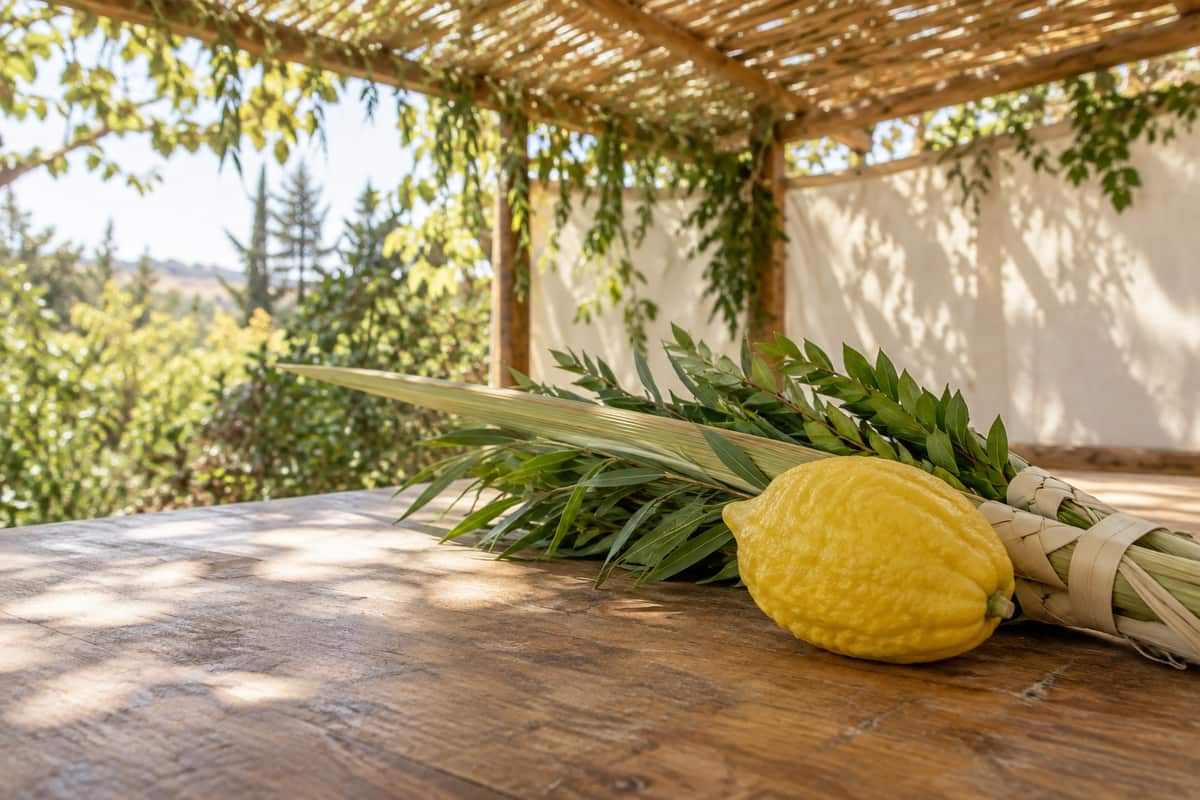
An etrog and bound lulav resting on a wooden table inside a sukkah

The Feast of Booths

You shall live in booths seven days … in order that future generations may know that I made the Israelite people live in booths when I brought them out of the land of Egypt …

Leviticus 23:42–43

Three Times a Year: The Shalosh Regalim

The sukkah reminds us that for forty years in the wilderness, we had no permanent home. We had only God. He fed us with manna, gave us water from the rock, and went before us in the cloud and the fire. Sukkot is also a harvest festival, a time to thank God for all He has provided.

So the meaning of the Feast of Tabernacles comes down to two things: remembering and rejoicing. We remember that God carried us, and we rejoice because He still does.

I want you to hold on to a number: three.

Three times a year, God called all Israel up to Jerusalem to worship Him. We call these the Shalosh Regalim, the three pilgrim festivals:

  1. Pesach (Passover and the Feast of Unleavened Bread, celebrated together)
  2. Shavuot (the Feast of Weeks)
  3. Sukkot (the Feast of Tabernacles, the one we’re in now)

The pilgrim festivals

Three times a year all your males shall appear before the LORD your God in the place that He will choose …

Deuteronomy 16:16

Simcha: The Joy God Commands

At these appointed times, God didn’t just ask our people to show up. He told them to rejoice before Him.

The Hebrew word for joy is simcha. For Sukkot above all, the Torah uses it again and again:

“You shall rejoice before the LORD your God seven days.” (Leviticus 23:40)
“You shall rejoice in your festival…” (Deuteronomy 16:14)
“…and you shall have nothing but joy.” (Deuteronomy 16:15)

Our sages noticed that joy is mentioned three times in connection with Sukkot. That is part of why it became known as the Season of Our Joy.

Think about that. Three times a year, God called His people to be happy in Him. He wanted them thankful, uplifted, and free, just beaming with His glory.

Consider the Number Three

Throughout the Tanakh, three is a sacred number that speaks of completeness and wholeness. Let me show you a few examples.

I AM: Ehyeh Asher Ehyeh

When Moses stood at the burning bush, he asked God, “Who should I say sent me?” God answered, Ehyeh Asher Ehyeh, “I AM THAT I AM” (Exodus 3:14). Then He revealed His Name, the four Hebrew letters Yod-Hei-Vav-Hei.

Think about the words “I AM.” “I AM” encompasses the three dimensions of time: past, present, and future. When God said “I AM,” He was telling us that He fills all three. He always was, He is right now, and He always will be.

We sing this every Shabbat in Adon Olam: v’hu haya, v’hu hoveh, v’hu yihyeh—“He was, He is, and He will be.”

The Mishkan: Three Places to Meet God

“Let them make Me a sanctuary that I may dwell among them.” (Exodus 25:8)

In Exodus 25, God told our people to build a mishkan, a tabernacle. The mishkan was the meeting place between God and Israel. And how many parts did it have? Three: the outer court, the Holy Place, and the Holy of Holies, where the Ark of the Covenant rested.

Abraham, Isaac, and Jacob

Our people come from three fathers: Abraham, Isaac, and Jacob. Every time we pray the Amidah, we call on Elohei Avraham, Elohei Yitzchak, v’Elohei Yaakov—the God of Abraham, the God of Isaac, and the God of Jacob.

God Wants You to Be Happy, Even When Life Is Hard

Three speaks of completeness, wholeness, and perfection. So when God commanded our people to rejoice at all three pilgrim festivals, this tells me He wants His people to be happy all the time, not just on holidays.

I know life is hard. It’s hard for me, and it’s hard for everybody. Some days we wake up carrying a lot of weight. Many of us carry grief, worry, and generations of pain. Our people know suffering better than almost anyone.

But God is asking us to practice something. We have to do our best to build a disposition in our hearts of gratitude, because Sukkot is about being thankful, and of simcha.

This doesn’t mean we won’t face challenges and struggles, or that nothing will make us sad. It means that at the deepest core of our being, we can have joy. We know that God chose us, that He loves us, that He is with us, and that He is working all things in our lives for good.

Sukkot and the Messiah: God Wants to Dwell With You

The prophet Zechariah tells us that Sukkot still has a future. In the days of Messiah, the nations will come up to Jerusalem (Zechariah 14:16).

Sukkot in the days of Messiah

… to bow low to the King LORD of Hosts and to observe the Feast of Booths (Sukkot).

Zechariah 14:16
Artistic rendering of the wilderness tabernacle beneath a column of cloud

Even as the Lord dwelt in the wilderness as His manifest presence hovered over the central tabernacle as a pillar of fire by night and a cloud by day, so too the Lord dwells with His people today. This is where I want to share something personal. As a Jewish man, I found that God’s desire to dwell with us reached its fullest expression in Yeshua, Jesus, the Jewish Messiah. His followers wrote that He “became flesh and tabernacled among us” (John 1:14). He is the Light clothed in humanity.

You don’t have to take my word for it. Read the Hebrew Scriptures for yourself and ask God to show you the truth.

This Sukkot, Choose Joy

So have joy this Feast of Tabernacles, my beloved friend. Sit in the sukkah, look up through the branches, and thank the One who always was, who is, and who always will be. He carried our people through the wilderness, and He wants to carry you too.

If this raised a question in your heart, we’d love to hear from you:

Chag Sameach.

Sukkot questions

Frequently Asked Questions About Sukkot

What is the meaning of the Feast of Tabernacles?

Sukkot, the Feast of Tabernacles or Feast of Booths, is a seven-day festival starting on the 15th of Tishrei. Jewish people live in temporary booths (sukkot) to remember how God cared for Israel in the wilderness after the Exodus (Leviticus 23:42–43). It is also a harvest festival of thanksgiving.

Why is Sukkot called the Season of Our Joy?

The Torah commands joy at Sukkot more than at any other festival (Leviticus 23:40; Deuteronomy 16:14–15). Jewish tradition calls it Zman Simchateinu, the Season of Our Joy.

What are the three pilgrim festivals?

The Shalosh Regalim are Pesach (Passover), Shavuot (Feast of Weeks), and Sukkot (Feast of Tabernacles). In Temple times, all Israel was commanded to go up to Jerusalem for each one (Deuteronomy 16:16).

What does simcha mean?

Simcha is the Hebrew word for joy or gladness. It is the joy God commanded Israel to have before Him at the festivals.

What does sukkah mean?

A sukkah is a temporary booth with a roof of branches. The word means “booth” or “hut.” Sukkot is its plural.

When is Sukkot in 2026?

Sukkot 2026 begins at sundown on Friday, September 25, and ends at nightfall on Friday, October 2. Shemini Atzeret follows.

Ask Privately

Have a private question?

Share your question with us. A real person from our team in Israel will read it and respond personally, typically within 24–48 hours.

Prefer to Text instead? Click here for our number.

Continue the Conversation

Ways to Reach Us

Whether you want to be notified about a future live conversation, send a text, or email us directly, we’d be glad to hear from you. Choose whichever option feels easiest.

Join a Live conversation

Coming Soon

We’re planning a live online conversation with Rabbi Kirt Schneider for Jewish people who have honest questions about faith, Scripture, and the Messiah.
Leave your email and we’ll send the details when the date is set.

Text Us Your Question

Personal Reply

Someone from our team will personally read your message and respond. Our team is in Israel, so replies may take up to 24 hours.
You can text your question to:
212-203-6406
If your on your phone, just click the button below.

Email us directly

Email

Prefer email? Email us at info@jews.com. We'd be glad to hear from you.