The Shadow
01 · Atonement
Yom Kippur · Rabbi K.A. Schneider
Yom Kippur is not merely a Jewish ritual but a prophetic shadow pointing directly to Yeshua (Jesus).
The Prophetic Shadow
Yom Kippur, the Day of Atonement, is the most holy day on God's sacred calendar apart from Shabbat, and its central purpose is to reveal how God provides forgiveness for sin through the blood of a substitutionary sacrificial atonement. Yom Kippur is not merely a Jewish ritual but a prophetic shadow pointing directly to Yeshua (Jesus). Yeshua's blood is the fulfillment of this ancient holiday. Yom Kippur is the foreshadow in the Hebrew Scriptures that's pointing to Jesus. He fulfilled it once and for all when He died on the cross.
The distinction between the shadow and the substance is critical. The ancient ceremony, in which the High Priest entered the Holy of Holies once a year carrying the blood of a bull and a goat (Leviticus 16), was effective within its context but temporary. Yeshua's sacrifice, by contrast, covers sins past, present and future and is permanent. The primary reason Yeshua came into the world was to deliver you and me from evil and reconcile us to the Creator. He accomplished this once and for all, rendering the annual repetition of animal sacrifices unnecessary.
Blood, Innocence & Substitution
At the heart of Yom Kippur is a non-negotiable theological principle: "the life of the flesh is in the blood," and it is "the blood by reason of its life that makes atonement." This is found in the Torah in Leviticus 17:11 and affirmed in the New Testament book of Hebrews: "Without the shedding of blood there is no remission of sins." The principle is substitutionary - it's only through an innocent one's blood being shed that a guilty one's sins can be atoned for.
Only one that's unblemished or holy can make a sacrifice for the sin of someone that's guilty. This is why Yeshua's sinlessness is not a minor detail but the very foundation of His atoning work. 2 Corinthians 5:21 says, "For He made Him who knew no sin to be sin for us, that we might become the righteousness of God in Him." Jesus took our sin, died in our place, and He gave us His righteousness instead.
Forgiveness does not come through fasting, liturgy, prayer, good deeds, or human merit. The only way that Israel has ever been forgiven, beloved ones, is through a blood sacrifice, when an innocent one died in their place. It wasn't through fasting, it wasn't through liturgy, it wasn't even through prayer. The only way that God can forgive sin and release people from their sin is when an innocent one dies in the guilty one's place. And this is what Yeshua HaMashiach did. He died in your place, and He died in my place.
The Great Exchange
2 Corinthians 5:21For He made Him who knew no sin to be sin for us, that we might become the righteousness of God in Him.
The Sacrificial System
The blood of bulls and goats offered on Yom Kippur could never, in itself, take away sin. Hebrews 10:1 establishes that these sacrifices were shadows and types of what was to come. The sacrifices are like a credit card. The card itself has no independent value, but the merchant accepts it because they know real payment is coming. God accepted the animal blood each year because He knew the final payment was coming in His Son.
This distinction matters because it clarifies that God did not ignore sin in the Hebrew Scriptures. The sacrifices were a legitimate, accepted covering within their context, but they were always pointing forward. All these blood sacrifices, including the blood that was sacrificed on the Day of Atonement, were simply shadows of the blood of Yeshua that was shed once and for all. The credit card analogy also carries a practical implication: the payment has been made, but the individual must still swipe the card through faith to access the benefit.
The High Priest & the Mercy Seat
In the ancient ceremony, the High Priest would enter the Holy of Holies, the innermost room of the Tabernacle or Temple, once a year on Yom Kippur. He would bring the blood of a bull and the blood of a goat and sprinkle it on top of the Ark of the Covenant, specifically on the Mercy Seat, which rested above the Ten Commandments. When the Lord saw the blood, He forgave the sins of Israel because the blood atoned for their sin. The blood on the Mercy Seat was the covering that allowed a holy God to forgive those that had sinned against Him.
Yeshua fulfilled this role as the superior High Priest. Hebrews 9 says: "Jesus entered through the greater and more perfect tabernacle, not made with hands; and not through the blood of goats and calves, but through His own blood, He entered the Holy Place once for all, having obtained eternal redemption." He offered Himself once and for all at the consummation of the ages, putting away sin by His own sacrifice.
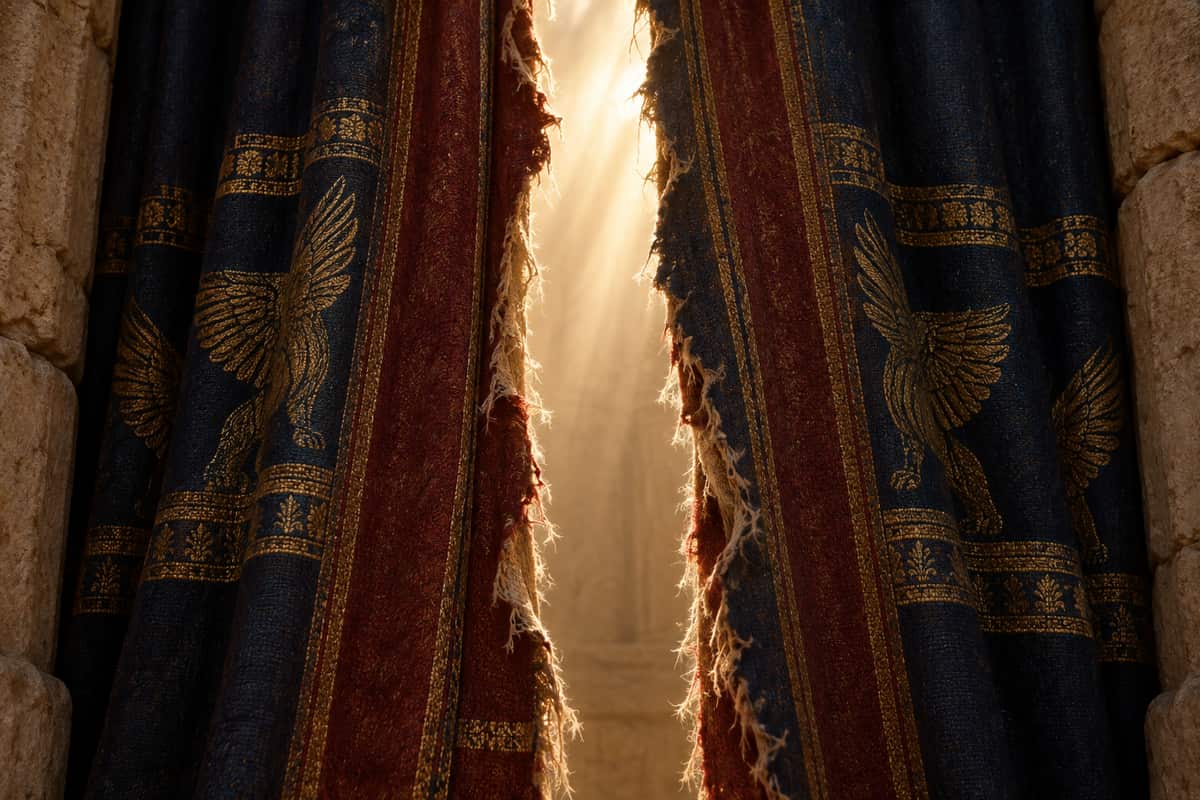
The tearing of the Temple veil at Yeshua's death is a central sign. When Yeshua breathed His last and said it's finished, that veil that separated the Holy of Holies and God’s presence from His people was supernaturally torn in two, showing us and teaching us that we now have access into God’s presence. The barrier between sinful humanity and a holy God has been removed for all who receive Yeshua by faith.
Awakening → Atonement → Celebration
01 · Awakening
Feast of Trumpets / Rosh Hashanah
02 · Judgement
Day of Atonement
03 · Reconciliation
Feast of Tabernacles
The three fall holy days form a prophetic sequence that is both a spiritual journey and a timeline of Messianic events. The sequence runs: Yom Teruah (Feast of Trumpets/Rosh Hashanah) announces judgment and the King's return; Yom Kippur (Day of Atonement) provides the means of forgiveness through the Messiah's blood; Sukkot (Feast of Tabernacles) is the resulting celebration of reconciliation and of all that Father God has done in our lives.
One cannot skip from awakening (Trumpets) directly to celebration (Sukkot) without passing through atonement (Kippur). The sequence is theological and practical: sin must be acknowledged, repentance must occur, and forgiveness must be received before true rejoicing is possible. Sukkot is the only holy day prophesied to be celebrated globally during the Millennial Kingdom, per Zechariah.
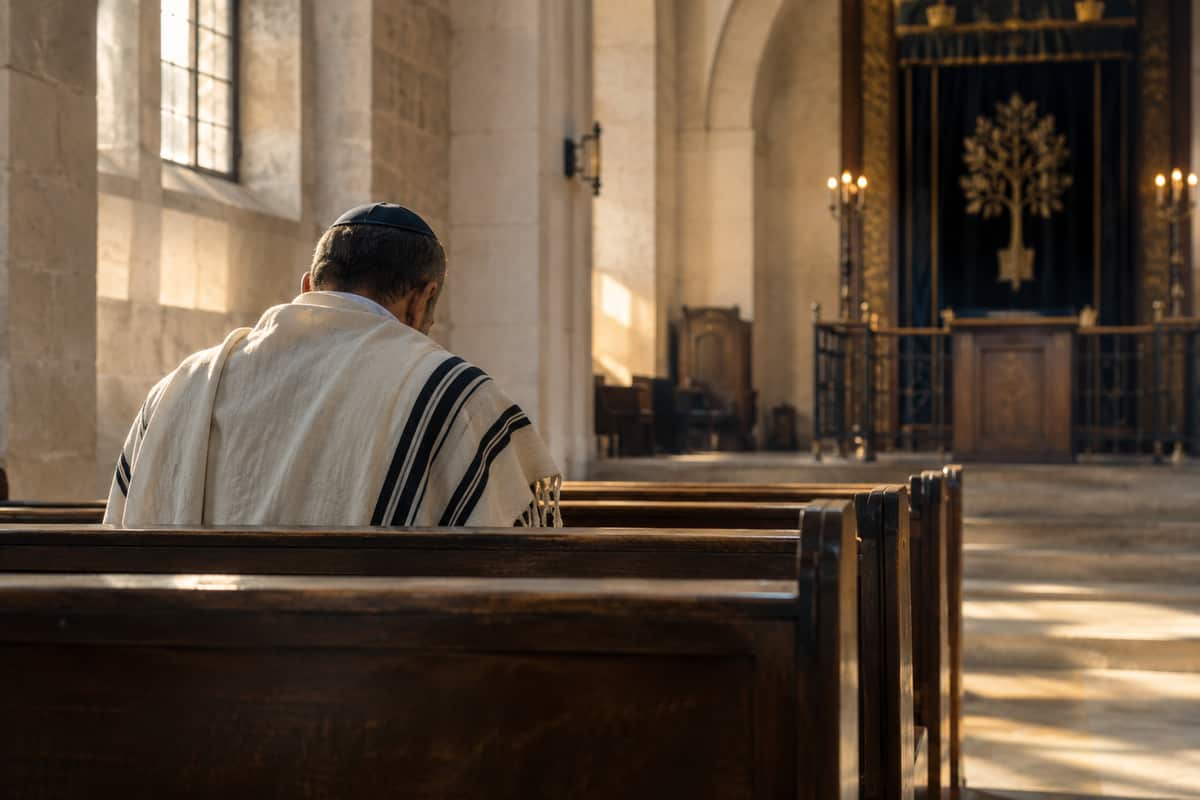
Teshuvah · Turning Back
The season leading to Yom Kippur is explicitly a season of teshuvah, Hebrew for repentance or turning back. Yom Kippur is a very special season, in which we do what we call in Hebrew teshuvah, which means repentance. The call is concrete: Are there any areas that you need to correct your behavior or correct your attitude? Are you cynical? Do you criticize? Do you have an angry spirit? It could be so many things, but this season of the year, beloved, is a season of teshuvah or repentance.
A Moment for Reflection
Repentance is defined not as a vague expression of sorrow but as a genuine turning away. Repenting is when you're given the opportunity to do the same thing again, that same sin, but you don't do it. It's not just saying, "I'm sorry." Repenting means to turn away. God's patience and kindness are not a license to persist in sin but are designed to soften the heart and lead to repentance.
Jewish tradition places tremendous emphasis on repentance, prayer, and seeking a favorable judgment during this season. But Scripture points to the atoning blood of Messiah as the basis for forgiveness. Because of the blood of Yeshua, those who place their trust in Him stand before the Lord holy and blameless before Him in love. Yet the season remains a time to wake up, examine oneself to avoid discipline, and prepare to receive God's blessings. The solemnity of the day is evident in Orthodox practice, where many refrain from wearing leather shoes as an expression of humility before God.
The Final Sacrifice
The destruction of the Temple in 70 AD created a profound question: How could the Torah's requirements for Yom Kippur be fulfilled without a functioning Temple, priesthood, or sacrificial blood? Yet none of these exist in their original biblical form today. With no Temple and no sacrifices, the priests have also scattered. So Judaism today is without a Temple, and there's no longer a functioning biblical priesthood.
The shedding of blood, with an innocent one dying in the guilty one's place, is the whole purpose of Yom Kippur. In some Orthodox Jewish communities today, the custom called kapparot is practiced whereby a chicken is put to death on behalf of the guilty Jewish soul. But the chicken cannot fulfill God’s requirement for justice as “the soul who sins will die” (Ezekiel 18:4).
Only Yeshua fulfills what the animal sacrifices in the Temple pointed toward. He is the final and sufficient sacrifice for sin. Jesus gave His life for you and for me, fulfilling Yom Kippur forever so that we never have to offer up the blood sacrifice of an animal again. His single offering perfected believers for all time.
A Personal Response
Just as each Israelite family had to apply the blood of the lamb upon their doorpost, so too each person must personally receive the forgiveness and atonement that Yeshua’s blood has provided.
Each one of us must individually appropriate that which He provided by receiving Him into our lives. We do this by opening up our heart to Him, inviting Him in, and pledging our allegiance to Him. This is not automatic. Forgiveness and atonement through Messiah is not something that automatically happens without man's participation. Man has to humble himself and put himself in a posture of being able to receive God's forgiveness. Leviticus 23:29 says that the soul that does not humble himself will be cut off.
The practical application extends beyond a one-time decision. Believers are called to get on their knees and fully receive the blood of Jesus, breaking off false guilt, judgment, and accusation, recognizing that His blood is sufficient for past, present, and future sins. The blood is not merely a legal transaction from a distance; it is living and continually being poured out like a waterfall, providing present, active forgiveness and cleansing each day.
Love & an Open Invitation
No matter what one has done, God's response is love and an open invitation to be forgiven. Because Father loves us so much, He made a way for us to come back into fellowship with Him, to be restored as sons and daughters, and to be able to stand before Him holy and blameless. The atonement achieved through Yeshua's blood means believers stand before God not on the basis of their own merit but on the basis of His love and the finished work of the cross.
Yet this grace does not negate the reality of judgment. The fear of the Lord is part of the weight of His glory yet is clean. God's patience gives people an opportunity to repent, but Scripture also reveals that this opportunity does not remain open indefinitely. By the time the bowls of wrath are poured out in Revelation, the opportunity for genuine repentance has closed for the permanently hardened. For those who have not yet received Jesus, the appeal is direct: "There's no name under heaven, by which men can be saved but the name of Yeshua of Nazareth." Yom Kippur serves as a reminder to repent before that window closes.
Because Yeshua atoned for our sins through His own blood on the cross 2,000 years ago, the Bible tells us that those who put their trust in Him have their sins forgiven once and for all, and forever. Beloved, if you love Jesus, you've been forgiven for your sin. Praise the name of Messiah Yeshua and glory to God the Father.
Pause · Reflect · Respond
Open a question for a moment of reflection on the teaching.
Are there any areas that you need to correct your behavior or correct your attitude? Are you cynical? Do you criticize? Do you have an angry spirit?
Repenting is when you're given the opportunity to do the same thing again, that same sin, but you don't do it. It's not just saying, "I'm sorry." Repenting means to turn away.
The blood is not merely a legal transaction from a distance; it is living and continually being poured out like a waterfall, providing present, active forgiveness and cleansing each day.
Ask Privately
Share your question with us. A real person from our team in Israel will read it and respond personally, typically within 24–48 hours.
Other Ways to Connect