Torah and Atonement

What role did God Himself assign to sacrifice and blood in the Torah's system of atonement?

God gave sacrificial blood a central role in the Torah’s provision for atonement. What does that reveal about sin, mercy, and restored fellowship with Him?

God Gave Blood for Atonement

God Himself gave sacrificial blood a central role in the Torah's provision for atonement. Atonement addresses the sin that separates people from God so that they can stand forgiven before Him.

Leviticus 17:11 explains why blood matters: the life of the flesh is in the blood, and God gave it upon the altar to make atonement. The sacrifice was His provision for His people, rather than a human invention for winning His favor.

The blood of the sacrifice signifies a life given on the worshiper's behalf. Its significance is not a magical property of the liquid, but the life surrendered in sacrifice according to God's command.

Rabbi Schneider emphasizes that sincere intentions, religious observance, and moral improvement cannot replace the sacrifice God has provided for sin. The purpose is restored fellowship with the God of Israel.

God also provided for a person who could not afford even the birds required for a sin offering. That person could bring fine flour, and the priest would make atonement, with forgiveness promised (Leviticus 5:11–13).

On Yom Kippur, the Day of Atonement, God specifically commanded sacrificial blood for Israel's atonement (Leviticus 16).

Life in the Blood

The life of the flesh is in the blood, and God gave it upon the altar to make atonement.

Leviticus 17:11 (paraphrased in the article)

A Life Given in the Place of the Guilty

God's assignment of blood connects the life given in sacrifice with the judgment due to sin. Sin is more than a mistake we can erase by deciding to do better. It ruptures our relationship with the Creator.

Ezekiel 18:4 speaks of the sinner's death, and the New Testament states that sin earns death (Romans 6:23). Rabbi explains the sacrificial picture through the innocent dying in the place of the guilty.

God's mercy does not ignore His justice; He provides a sacrifice on the guilty person's behalf.

This is called substitutionary sacrificial atonement: a sacrifice offered on another's behalf to deal with sin and restore relationship with God. The word substitutionary describes the innocent taking the guilty person's place.

The sacrifice shows both the seriousness of sin and God's mercy in providing a way for His people to remain in fellowship with Him.

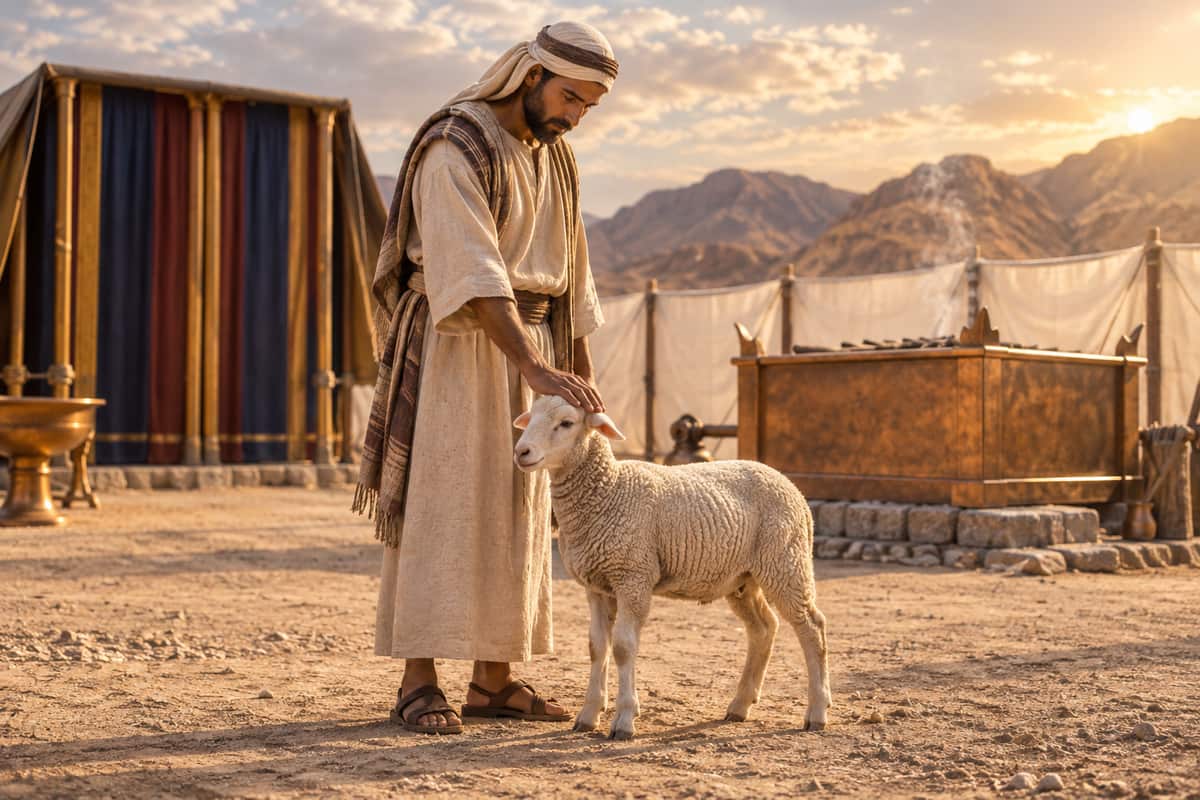
Leviticus 1:3–5 describes an unblemished animal, the worshiper's hand laid upon its head, and the priests' presentation of its blood at the altar.

Rabbi explains this laying on of the hand as a picture of the worshiper's sin being placed upon the sacrifice. The unblemished animal points toward the innocence of the One who would ultimately bear our sin.

The worshiper receives God's provision rather than earning forgiveness through the value of the offering.

Artistic depiction of an Israelite worshiper laying a hand on an unblemished lamb near the tabernacle altar

Passover and the Blood of the Covenant

The first Passover shows God providing protection from judgment through the blood of a lamb. In Exodus 12:5–13, Israel's households were instructed to slaughter an unblemished lamb and apply its blood to their doorposts.

When judgment came upon Egypt, God passed over the homes marked with blood.

Passover's protection of Israel's households and Yom Kippur's atonement rites are distinct events. Yet Rabbi draws attention to their shared picture: God provides deliverance through a life given and blood applied according to His instruction.

He sees the Passover lamb as pointing forward to Yeshua, the Hebrew name for Jesus, whom he confesses as Israel's Messiah. The title Lamb of God connects His sacrificial death with the biblical image of the lamb.

Blood also marked Israel's covenant relationship with God at Sinai. Exodus 24:8 describes Moses sprinkling blood upon the people and identifying it as the blood of the covenant. A covenant is a binding relationship with its commitments.

Rabbi connects this event with Yeshua's description of His own blood as the blood of the covenant poured out for forgiveness (Matthew 26:28). The New Covenant is the relationship with God that the New Testament presents as established through Yeshua.

Blood of the Covenant

Blood also marked Israel's covenant relationship with God at Sinai.

Exodus 24:8 (as summarized in the article)

The Altar and the Priest

The altar in the Tabernacle shows that sin must be dealt with for people to have fellowship with God. The Tabernacle, called the Mishkan in Hebrew, was Israel's sanctuary in the wilderness.

Within its outer court stood the bronze altar where sacrifices were offered. Sacrifice took place at the altar before the entrance to the inner sanctuary.

Rabbi understands the Tabernacle's entrance and altar as a picture of entering relationship with God through Yeshua and His sacrifice. The sacrifice addressed the barrier of sin so that the worshiper could continue in relationship with a holy God.

It did not grant entry into the priestly rooms of the sanctuary.

The washing basin beyond the altar was for the priests (Exodus 30:18–21), and entry into the Holy of Holies was reserved for the high priest under God's instructions for Yom Kippur (Leviticus 16).

The priests performed the ministry God assigned to them, presenting sacrificial blood on behalf of the people. A mediator acts on behalf of another in a relationship.

Rabbi sees this priestly role pointing toward Yeshua, who brings people into relationship with God and becomes the sacrifice offered on their behalf.

The New Testament's claim is that Yeshua is the one perfect and final mediator between God and humanity.

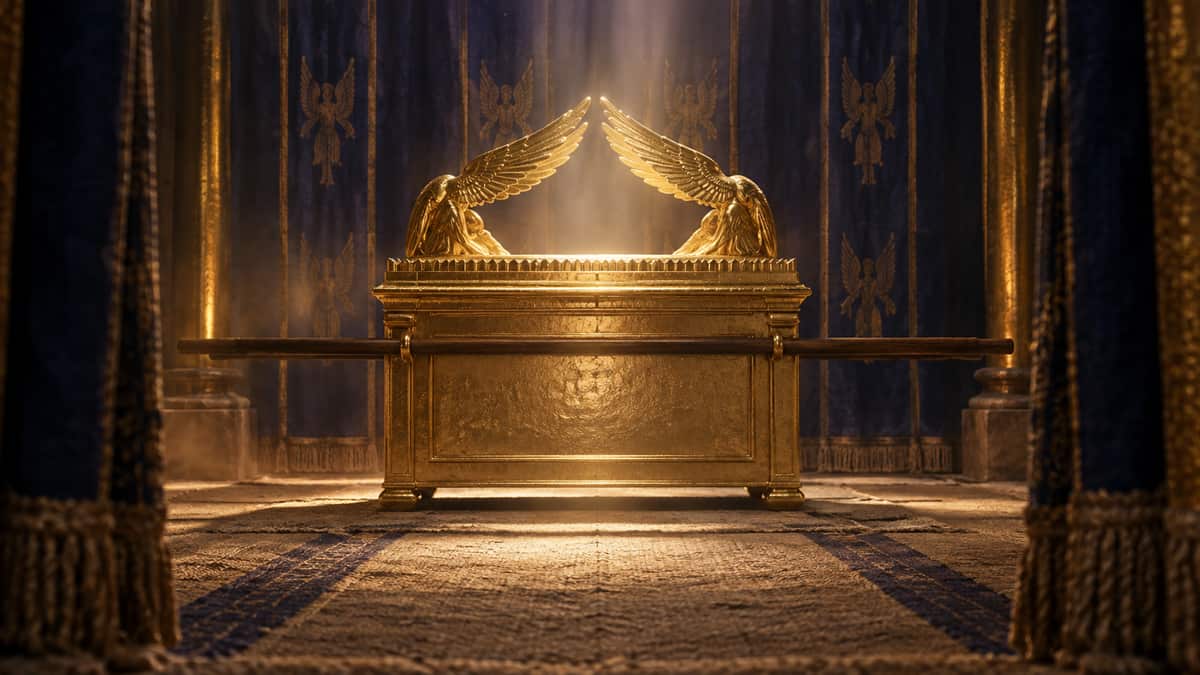
Artistic rendering of the Ark of the Covenant and mercy seat inside the Tabernacle

Yom Kippur and the Mercy Seat

On Yom Kippur, the tenth day of the seventh month, the high priest entered the Holy of Holies with sacrificial blood. The Holy of Holies was the Tabernacle's innermost sacred room.

It housed the Ark of the Covenant, which contained the covenant tablets. The Ark's cover is often called the mercy seat.

Leviticus 16:11–16 describes the bull offered for the high priest and his household and the goat offered for the people. The high priest sprinkled their blood on and before the mercy seat.

These rites also made atonement for the sanctuary because of Israel's uncleanness and sins. Rabbi connects the blood above the covenant tablets with forgiveness for the people who had broken God's commandments.

The law exposed their transgression, while the sacrifice expressed God's provision for forgiveness.

These offerings were repeated each year. God had truly provided atonement for Israel through the rites He commanded.

Rabbi explains their repetition through the New Testament book of Hebrews, which teaches that animal sacrifices pointed forward to a sacrifice that would deal with sin permanently.

A Shadow of the Sacrifice to Come

Rabbi describes the animal offerings as shadows pointing toward Yeshua's sacrifice. A shadow directs our attention to the reality that casts it.

In this teaching, the offerings God appointed prepared the way for the Messiah's sacrifice; they did not have the power in themselves to remove sin permanently. This is the interpretation given in Hebrews 10:1–14.

Rabbi illustrates this with a merchant accepting a credit card because payment will follow. The plastic card itself is not the money owed.

In a similar way, he explains that God accepted the animal offerings in view of the sacrifice Yeshua would make. The illustration helps distinguish God's temporary provision from the permanent atonement toward which it pointed.

Only Yeshua fulfills what the animal sacrifices pointed toward.

The Sacrifice to Come

Only Yeshua fulfills what the animal sacrifices pointed toward.

From this teaching

Yeshua as the Sacrifice and the Mediator

Rabbi identifies Yeshua as God clothed in humanity, living a perfect life and giving Himself for the sins of the world. Yeshua is the innocent One whose blood provides permanent atonement.

His sacrifice is once for all: a completed offering that does not need to be repeated.

Yeshua gave His life on the cross, shedding His blood. John 19:28–34 records Yeshua declaring His work finished and then dying. A soldier subsequently pierced His side, from which blood and water came.

Rabbi emphasizes the reality of His life given and blood shed as the sacrifice accepted by God.

Because Yeshua is the perfect sacrifice, Rabbi teaches that the repeated animal sacrifices have reached their fulfillment. Their repetition is no longer needed to accomplish what His single offering has completed.

His blood remains the basis of forgiveness and fellowship with God.

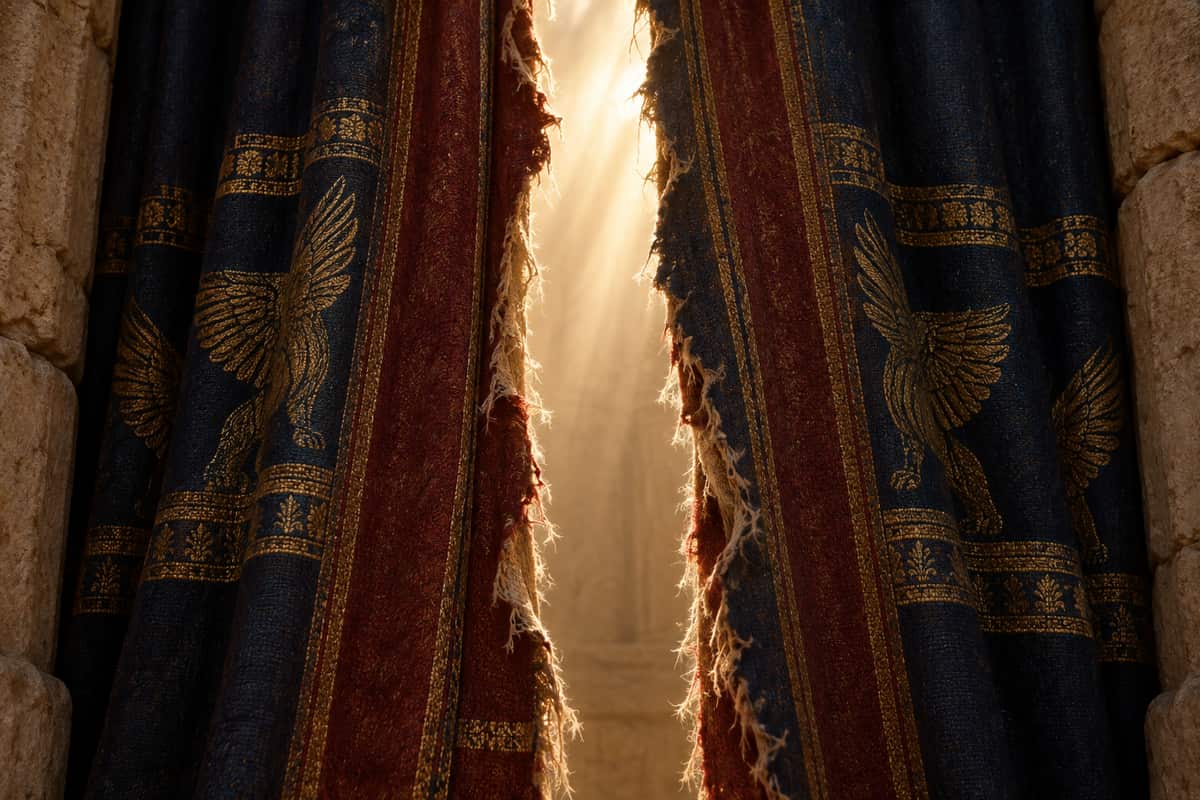
Yeshua also fulfills the priestly role, representing people before God and offering Himself for them. His death opened access into God's presence. Matthew 27:50–51 describes the Temple curtain being torn at His death.

That curtain separated the Holy Place from the Holy of Holies, where the high priest entered for the annual atonement rites. Its tearing expresses the access to God that Yeshua provides.

Hebrews 10:19–22 calls those who trust Him to draw near to God through His blood.

Artistic rendering of a torn sanctuary veil with light shining through

Receiving God's Provision Personally

God's provision of atonement calls for a personal response of humility, repentance, and faith. Leviticus 16:29–31 calls Israel to humble themselves on Yom Kippur. Rabbi connects this humility with acknowledging sin and turning back to God.

The sacrifice was never permission to continue in sin without repentance. Yeshua's warning in Luke 13:3 likewise makes repentance necessary.

In Jewish life, the Ten Days of Awe, beginning with Rosh Hashanah and leading to Yom Kippur, are a season of repentance and self-examination. Rabbi draws attention to the need to make things right and prepare the heart to receive God's provision.

Receiving Yeshua's atonement likewise calls for repentance and personal trust in Him. Faith means trusting Him and receiving Him into our lives, with a commitment to follow Him. Confession means openly acknowledging Him as Lord.

Applying His blood to our lives describes receiving the forgiveness His sacrifice provides; it is not a physical blood ritual.

Revelation 12:11, in the New Testament, describes believers overcoming through the blood of the Lamb, their testimony, and faithfulness even in the face of death.

Rabbi explains that forgiveness and atonement through Messiah do not automatically happen without our participation. His call is to repent, believe, confess, and give ourselves wholeheartedly to Yeshua.

Responding with Wholehearted Devotion

Yeshua's sacrifice calls for wholehearted devotion rather than treating Him as an addition to an otherwise unchanged life. Rabbi draws this lesson from the Passover lamb, which was to be eaten with any remainder burned.

He uses that image to describe receiving God's grace with wholehearted love and commitment.

God gave blood upon the altar to make atonement. The sacrifice confronted the seriousness of sin while revealing His mercy in providing a way for His people to remain in relationship with Him.

Rabbi teaches that this provision reaches its fullness in Yeshua, whose blood is God's final remedy for sin.

Receiving His forgiveness brings us into fellowship with the Creator and calls for a life of wholehearted devotion to Him.

Questions from the Article

Frequently Asked Questions About Sacrifice and Atonement

Why did God give blood a role in atonement?

Leviticus 17:11 says that life is in the blood and that God gave it on the altar to make atonement. In the article, sacrificial blood signifies a life given on the worshiper's behalf so that sin can be addressed and fellowship with God restored.

Did the Torah make provision for someone who could not afford an animal offering?

Yes. Leviticus 5:11–13 allowed someone who could not afford even the birds required for a sin offering to bring fine flour, with atonement and forgiveness promised. The article distinguishes this provision from the blood rites commanded for Yom Kippur in Leviticus 16.

Are Passover and Yom Kippur the same kind of rite?

No. The first Passover concerned protection of Israelite households during judgment in Egypt; Yom Kippur involved annual atonement rites for Israel. Rabbi Schneider draws a shared picture of deliverance through a life given and blood applied according to God's instruction.

What happened at the mercy seat on Yom Kippur?

Leviticus 16:11–16 describes the high priest bringing blood from a bull for himself and his household and from a goat for the people, sprinkling it on and before the Ark's cover. The rites also addressed the sanctuary's uncleanness.

How does Rabbi Schneider connect these sacrifices to Yeshua?

He teaches that the animal offerings pointed forward to Yeshua's completed sacrifice. Hebrews 10:1–14 is the New Testament passage he uses to explain why the repeated offerings were a shadow of permanent atonement.

What response does the article call for?

The article calls for humility, repentance, personal trust in Yeshua, and wholehearted devotion. It presents forgiveness as God's provision to be received, rather than a ritual performed with physical blood.

Ask Privately

Have a private question?

Share your question with us. A real person from our team in Israel will read it and respond personally, typically within 24–48 hours.

Prefer to Text instead? Click here for our number.

Continue the Conversation

Ways to Reach Us

Whether you want to be notified about a future live conversation, send a text, or email us directly, we’d be glad to hear from you. Choose whichever option feels easiest.

Join a Live conversation

Coming Soon

We’re planning a live online conversation with Rabbi Kirt Schneider for Jewish people who have honest questions about faith, Scripture, and the Messiah.
Leave your email and we’ll send the details when the date is set.

Text Us Your Question

Personal Reply

Someone from our team will personally read your message and respond. Our team is in Israel, so replies may take up to 24 hours.
You can text your question to:
212-203-6406
If your on your phone, just click the button below.

Email us directly

Email

Prefer email? Email us at info@jews.com. We'd be glad to hear from you.